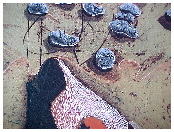
Detail of the print used for the
artist's 1969 stamp, showing the
effects of viscosity printing. Green, thin, low
viscosity ink was first, followed by red, high
viscosity ink. Black and blue inks were
in the textures of this etched and engraved plate.
|
The word viscosity refers to the thinness
or thickness of fluids, such as ink. Low viscosity ink is runny; high is
stiff. It's the amount of vehicle, usually an oil, that makes the
difference.
Inks of very different viscosity don't readily mix. A printer can use a low viscosity ink on a hard roller and roll
it across a relief printing plate. It lays ink on the high spots. Then the
printer uses another roller, a soft one, and rolls out the thick, high
viscosity ink.
Rolling it across the same plate, the low
viscosity ink actually resists the thicker ink, but the roller, being
soft, "sinks" down into the lower parts of the relief plate. You
get two colors for the price of one!
There's more! If, to start out, the printer inks
and wipes the plate for intaglio printing (the ink is in the lines and
textures etched or engraved in the plate), then there's a third color.
Think of the possibilities!
You're pretty smart to have given
this response.
- GM
|